Run a 100 Square Raffle Without the Paper Board
Fill a grid with names, then draw the winning squares at random, right on the board where everyone can watch. Share one link, players claim squares from their phone, and the draw takes one click. No spreadsheet, no hat, no "trust me, I shuffled them."
What Is a Raffle Board? (Also Called a 100 Square Fundraiser Grid)
You've seen one taped to the wall of a firehouse or passed around the office: a grid of 100 squares, names scribbled in marker, and a promise that someone will draw the winner "at the event." It goes by a bunch of names: 100 square fundraiser, 100 square grid, pick-a-square, square raffle fundraiser, raffle squares, raffle grid, sponsor a square. The rules are the same everywhere. People claim squares, the board fills, and winning squares get drawn at random. Whoever holds a drawn square wins the prize.
It's the easiest group game that exists, because there is nothing to know and nothing to predict. And that's exactly why it works for baby showers, team fundraisers, office parties, and any group where half the people would rather not learn what a moneyline is.
The draw is the whole show. So it should happen where everyone can see it, not in someone's kitchen with a cereal bowl full of paper scraps.
How to Run a 100 Square Raffle Online
Create the board, pick a size (100, 50, or 25 squares), set how many winners get drawn, and pick your draw date. Then share the link. Players tap the squares they want and their name goes on the grid, no app, no account required for them. You approve players, and you can cap squares per person so one enthusiastic uncle doesn't take forty.
When the board is full, you get one big draw button. Each click reveals one winning square, picked by a cryptographic random number generator from approved squares only, and the reveal lands with a stamp on the grid and a celebration on the winner's screen. Drawing three prizes in front of a live room? That's three separate moments of suspense. Want it over in one shot instead? The dropdown next to the button draws every winner at once. Either way, every approved player gets the full results by email when the draw finishes, and if the board never quite fills you can still draw from the claimed squares only. Empty squares can't win.
How to Pick a Winner on a 100 Square Raffle Board
The old way is two hats, a cereal bowl of paper scraps, or a random number generator in one tab and a photo of the board in another so you can work out who had 47. Here the board already knows. Hit the draw button and a cryptographic random number generator picks a winning square from the approved claims only, one square per click, so each prize gets its own moment of suspense in front of the room.
Every claimed square has exactly the same chance, and on a full 100 square board that is 1 in 100. Squares nobody claimed cannot be drawn, so you never get the paper-board problem where the number you pulled belongs to an empty box and you have to draw again. A square that has already won is out of the pool too, so the same square cannot win twice. A player holding several squares still has several chances, which is worth saying out loud before you start if your group would rather spread the prizes around.
Knock-Out Raffle: Eliminate Squares Until One Is Left
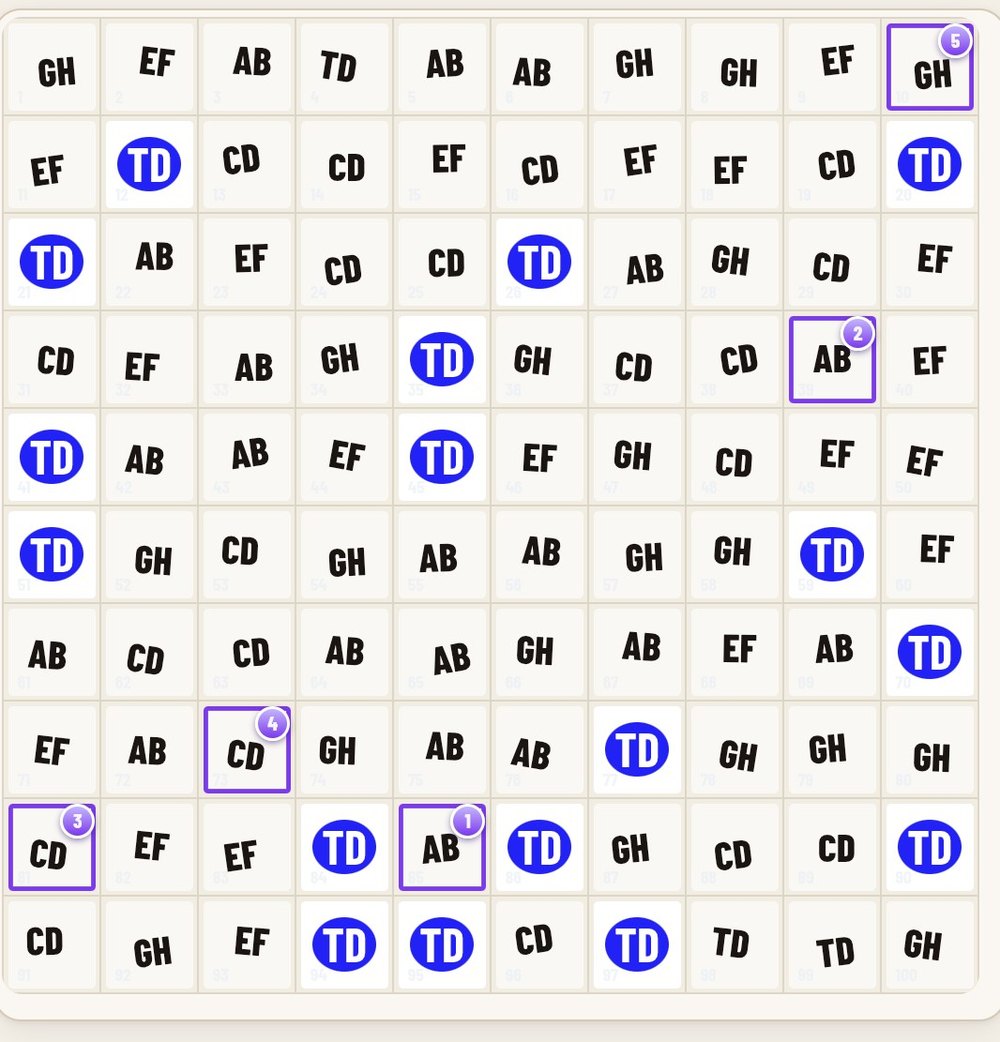
Most raffle boards crown a winner every time you draw. A knock-out raffle, also called a reverse raffle, does the opposite: every draw takes a square out, and the board keeps going until only the last square is left standing, or the last few if the host set it up that way. It is the same grid, the same claiming, the same random draw button. The only thing that flips is what a draw actually means.
By default the last square standing wins. Want more than one survivor? Set how many squares should survive when you create the board (most hosts pick one to three), and the draw stops the moment that many are left. A 25 square board that eliminates down to three still gives you a real final stretch, it just gets there faster than a full 100 square grid does.
The board locks on the first elimination, same as any raffle draw, so approve or decline every pending request before you start. Once the eliminations begin, the pool cannot grow from the outside; every square already in it stays eligible until it gets drawn.
Most eliminations are quiet on purpose: the square gets its X, a short note at the top of the screen names it and says how many are still standing, and the sequence moves on. No click to dismiss, nothing to slow the room down. Want the room to notice a few moments along the way anyway? Turn on "Celebrate the first square out", or a milestone every Nth elimination (every 25th, say), when you set up the board. Those specific draws are the ones that get a real reveal, with a running "N down, M to go" note, a small breather in an otherwise quiet sequence.
Pacing is yours to control. The default is a button: one click eliminates the next square. Running the room yourself and want it hands-off between clicks? Switch on Auto and set an interval (10, 20, 30, or 60 seconds), and it takes it from there, with a pause button always sitting right there. A milestone reveal that lands while Auto is running clears itself after a few seconds instead of waiting on a click; a manual milestone waits for you to move on. It pauses the moment the tab running it stops being the active one and picks back up automatically when you return to it, so it never keeps eliminating while nobody is actually watching. Anyone else on the board sees a small "Auto-advancing" pill with the countdown, so it reads as paced, not stuck.
Whichever elimination happens to be the last one needed decides things right then, survivors and all; there is no extra draw waiting on an already-known result. The winners timeline reads "Eliminated" for as long as the sequence is running and switches to "Winners" the moment it is not. Everyone still standing gets an email once it's decided, along with the host. Pick My Square does not touch money on a knock-out board any more than it does on a classic one; whatever your group is playing for is entirely between you, off the site.
Board Sizes: 100, 50, and 25 Square Raffle Boards
The classic is the 100 square raffle board, a 10x10 grid numbered 1 to 100. There is also a 50 square raffle board (5x10) and a 25 square raffle board (5x5) for smaller groups, a single classroom, or when you want the grid full by Friday instead of by the end of the month. A printable template locks you into one size per file. Here you pick the size when you create the board, and the square numbers adjust to match.
When to Run a Raffle Board
Fundraisers
Booster clubs, PTAs, fire departments, youth sports. The 100 square board is a fundraiser staple because everyone understands it in five seconds. Running it online means no chasing people down at pickup to write their name on a poster board.
Baby showers and gender reveals
Guests grab squares before the party, the draw happens live at the event, and grandma can play from two states away.
Office parties and holiday events
A prize basket, a grid, and a two-minute draw at the end of the party. It's the lowest-effort event game there is, and it still gets people invested.
Any day without a game
Our squares boards usually ride on an NFL or NBA score. A raffle board needs no game at all, so it works on a random Tuesday in July just as well as it does on Super Bowl Sunday.
Raffle Board vs Football Squares
Same grid, different engine. In football squares, winners come from the score of a real game: digits get assigned to the rows and columns, and the scoreboard decides who wins each quarter. On a raffle board there is no game and there are no axis digits. Squares are just numbered 1 through 100, and randomness IS the game. If your group is gathering around a matchup, run squares. If there's no game (or no interest in one), run the raffle board. And if your crew would rather predict games than draw numbers, March Madness bracket pools are open year-round too.
Tips for Running a 100 Square Fundraiser
- Announce the draw date up front and put it on the board. Urgency fills grids; "whenever it fills up" doesn't.
- Decide the prize split before anyone claims a square. Fundraisers commonly keep half the pot for the cause and split the rest across two or three drawn winners.
- Cap squares per person on small groups. On a 25 square board, one person holding ten squares deflates everybody else.
- Approve players as they come in, not the night before the draw. Only approved squares are eligible, so a backlog of pending players the morning of your draw is a headache you can avoid.
- If you charge for entry, know your local raffle rules first. Many places only allow paid raffles for licensed charities. A free board with a donated prize usually keeps you clear of raffle rules entirely.
Prefer paper? Print a free blank grid and draw with our random number generator or the name picker wheel. But the online board tracks claims and runs the draw for you, so paper is doing it on hard mode.
The Money Stays With You
Pick My Square never collects entry fees, holds a pot, or pays out prizes, on raffle boards or any other board. The site tracks who has which square and runs a draw everyone can trust. Whatever your group plays for is collected and handed out by the organizer, the same way it worked when the board was taped to the breakroom wall. If your raffle charges for entry, checking your state and local rules is on you as the organizer.
Create Your Raffle Board
Free. Share a link. Draw winners at random with one click.
Start Your Raffle Board