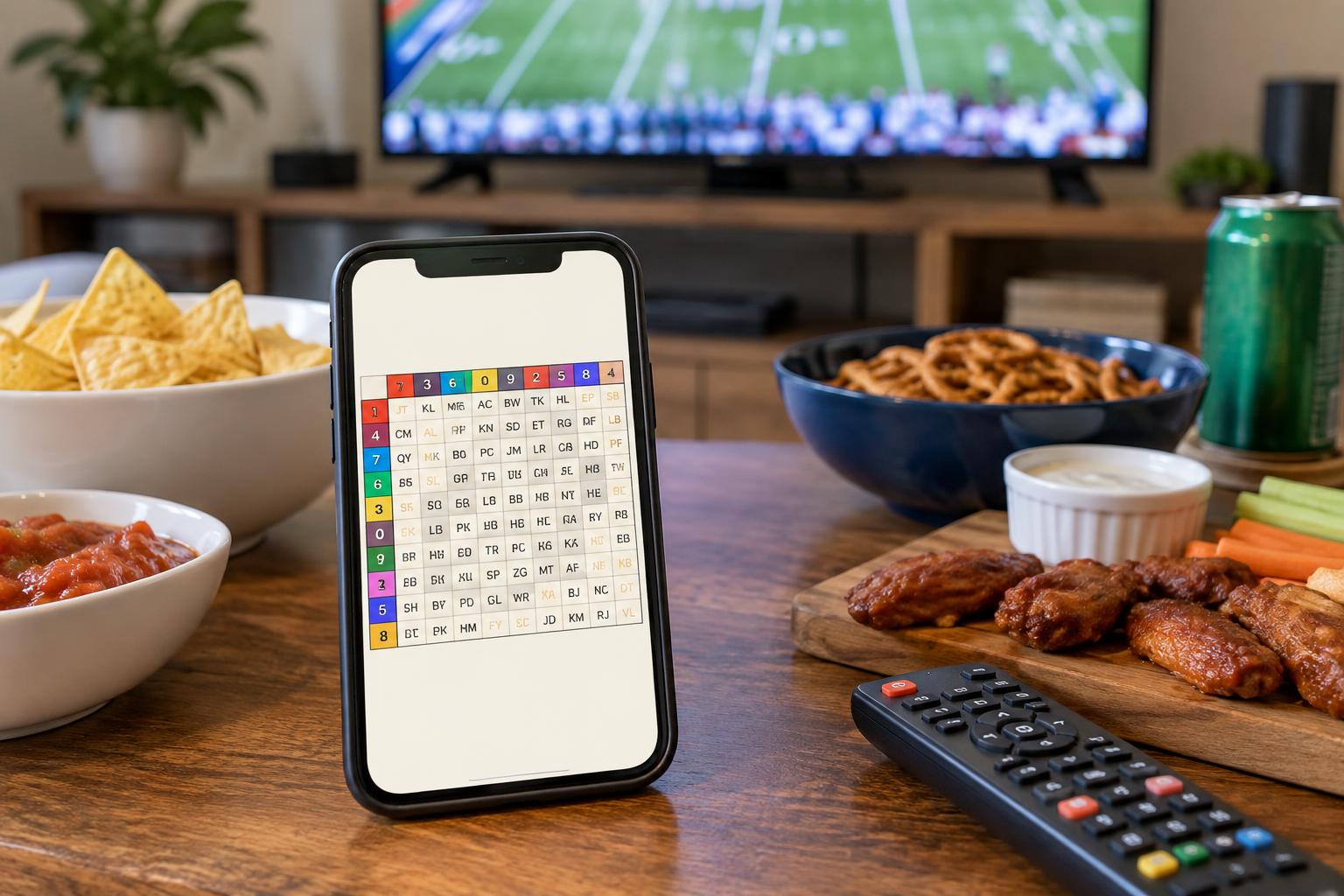
The standard 10x10 squares grid is great. It's the reason half your office knows what a "squares pool" even is. But if you've run the same one every Sunday for three seasons, you've probably noticed the energy dip around Week 6. People buy in out of habit, the group chat goes quiet, and the person in charge of collecting numbers starts to feel like they're doing paperwork instead of running something fun.
We're deep enough into the 2026 season now (Week 6, with the 49ers sitting at 5-0 and nobody quite sure what to make of the AFC yet) that the novelty of a fresh season has worn off. This is exactly when a tired pool loses people. So here are some ways to shake up the office pool without reinventing anything or making your coworkers learn a new rulebook.
Change what the numbers pay out, not the grid itself
Before you throw out the 10x10 entirely, try keeping the grid and changing the payout structure. This is the cheapest upgrade and it fixes the most common complaint: that the same two people win every week because they grabbed the good digits.
A few options that work:
- Pay every quarter, but weight the end. Instead of splitting the pot four equal ways, make the first quarter worth 15%, the halftime and third-quarter lines worth 20% each, and the final a fat 45%. More people stay invested into the fourth quarter because the big money is still live.
- Reverse-number winners. Pay the square that matches the score, and also pay the square whose digits are flipped. A 17-14 game pays the 7-4 square and the 4-7 square. Twice the winners per line means twice the "oh hey, that's me" moments. We built this into our boards directly, so you don't have to track it by hand.
- Score-differential payouts. Instead of matching both teams' last digits, pay the square that matches the last digit of the winning margin. It's a different math that rewards different squares, and it's a genuinely new game for a room that's been playing the same way for years.
None of this requires a bigger grid or more collecting. You're just telling 100 squares to behave differently once they're sold.
Run it across a whole slate instead of one game
A single-game board is a one-night event. If your office watches football all day Sunday anyway, a board that lives across the full slate keeps the chatter going from the 1pm kickoffs through Sunday night. Some groups set up a board per marquee game and let people spread their buy-ins around. The person who whiffed on the early window still has the night game to look forward to.
This is where squares beat most other office pool formats on pure low-maintenance fun. A pick'em or confidence pool means somebody is grading picks every single week and fielding "wait, did my pick count?" messages. Squares grade themselves. The score comes in, the winning square is obvious, done. If you want the full walkthrough on running one cleanly, our guide to running football squares covers the collecting-and-paying part that trips people up.
Mix in formats that aren't squares at all
Squares are our thing, but an honest list of office pool ideas has to admit that squares aren't the only game people run at work. A few that pair well alongside a squares board:
A survivor pool (pick one team to win each week, never reuse a team, one loss and you're out) creates real drama by Week 8 when everyone's burned their safe picks. A prop sheet for the big primetime games (first team to score, over/under on total points, longest touchdown) is a fun one-sheet you print and hand out. A weekly high-score pot where everyone picks three games against the spread keeps the competitive coworkers happy.
The catch with all of those is tracking. They need somebody willing to be the commissioner, and that job gets old fast. Squares are the format you reach for when you want participation without volunteering yourself for a season of spreadsheet duty. If you're weighing low-effort against high-effort, we wrote about why the simple formats win more often than fantasy die-hards want to admit.
Make it a fundraiser instead of a payout pool
If your office is the kind of place that does a holiday toy drive or sponsors a local youth team, point the pool at that instead of splitting cash. A 100-square board where the squares cost a few bucks each and the proceeds go to a cause will pull in people who'd never join a gambling pool. It also sidesteps the awkward "are we allowed to run a cash pool at work" conversation that HR sometimes has opinions about.
The mechanics are identical to a normal board. You're just changing where the money lands. We put together a whole 100-square raffle fundraiser guide if you want the setup that keeps it clean and transparent, which matters a lot more when it's charity money than when it's beer money.
Theme the board to your office
Small touches keep a pool feeling alive. Name the board after the office rivalry (Accounting vs. Everybody). Let people claim squares in their fantasy-team colors. Run a short side bet on who lands the 0-0 square, which is historically one of the best first-quarter squares to own. These cost nothing and they're the difference between a pool people tolerate and one they talk about on Monday.
If your group leans hard into one team, build the whole season around their Sunday games. Our NFL squares every Sunday guide is basically a blueprint for making a recurring board feel like an event instead of a chore.
Office Football Pool FAQ
What's the best office pool for people who don't follow football?
Squares, easily. You don't need to know a single player or team to win. You get a random square, the scores land where they land, and casual fans win just as often as the stat nerds. That randomness is why squares pull in the whole office instead of the same six die-hards.
How many people do I need for a good office pool?
A full 100-square board wants around 20 to 40 buyers, each grabbing a few squares. If you've got a smaller group, let people claim more squares each so the grid still fills. An empty board with 30 open squares is the fastest way to kill the mood, so sell it as "grab three or four" from the start.
Can I run a pool across the whole NFL season instead of one game?
Yes. Set up a fresh board each week for the game your office cares about most, or run several at once for a big Sunday slate. Each board settles on its own game's score, so a season-long rhythm is just a series of weekly boards, not one giant complicated thing.
Is an office squares pool legal?
Rules vary by state and by company policy, so check both before you collect real money. Plenty of offices sidestep the question entirely by running the board as a free game or a charity fundraiser, where no one's pocketing winnings.
How do I keep people from losing interest mid-season?
Change the payout structure, not the grid. Paying every quarter with a heavier final-quarter cut, or adding reverse-number winners, doubles the number of people who have a reason to watch the end of the game. More winners spread across more squares keeps more of the office in it.
Do I have to collect and track everything myself?
Not if you run it online. The whole reason commissioners burn out is the manual collecting, number-drawing, and payout math. A digital board handles the random number assignment and flags the winning square automatically, so your only job is inviting people.
Start a board your whole office will actually play
Pick a format, invite your coworkers, and let the board handle the numbers and the winners. It's free, and you'll never chase a spreadsheet again.
Create Free Board →